Introduction: The Next Evolution of CRM
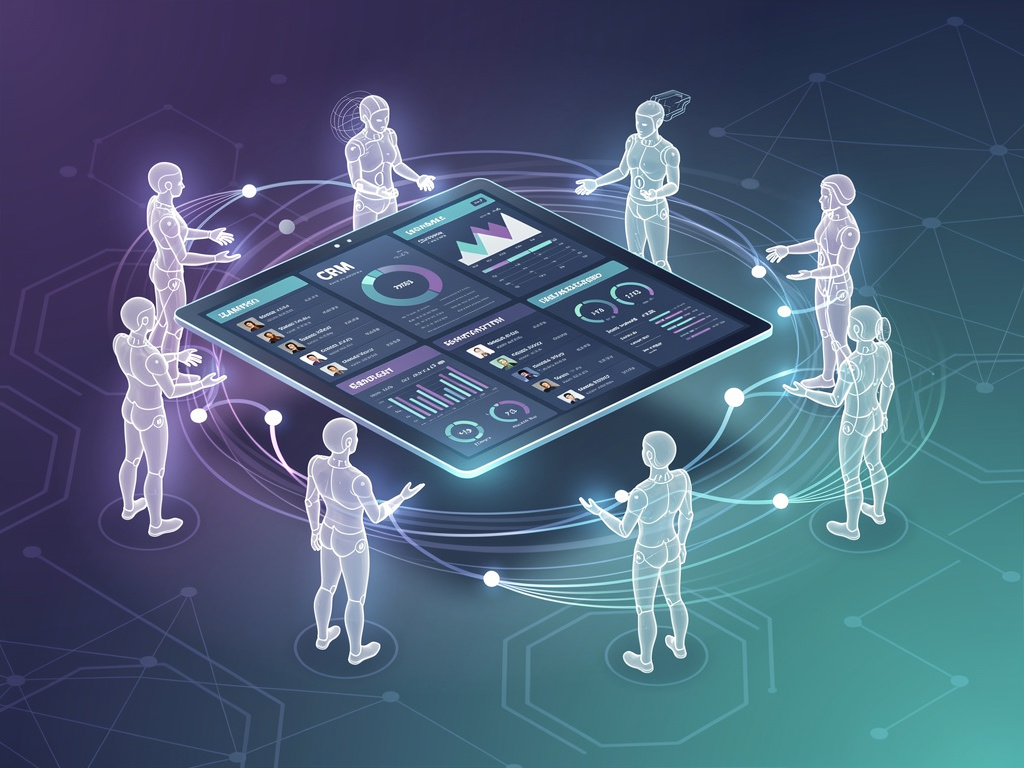
Customer Relationship Management (CRM) has long been the backbone of business operations, helping companies track interactions, manage leads, and personalize customer experiences. But as data volumes explode and customer expectations soar, traditional CRM systems are struggling to keep up. Enter AI-powered agents—the game-changer that’s transforming CRM from a static database into a dynamic, self-optimizing ecosystem.
As someone deeply immersed in AI, automation, and e-commerce, I’ve seen firsthand how AI agents can augment CRM systems—not just by automating tasks, but by enabling predictive insights, real-time personalization, and autonomous decision-making. In this post, we’ll dive into how AI agents are reshaping CRM, the technologies driving this shift, real-world use cases, and what the future holds for businesses ready to embrace this transformation.
Why Traditional CRM Falls Short
Traditional CRM systems excel at storing and organizing data, but they often fail in three critical areas:
- Static Data, Dynamic Customers CRM databases are snapshots in time. Customers, however, are constantly evolving—changing preferences, behaviors, and needs. Static CRM systems can’t adapt in real time, leading to missed opportunities and outdated insights.
- Manual Processes Slow Down Innovation Sales teams spend ~20% of their time on manual data entry (HubSpot, 2023). This not only drains productivity but also introduces human error, compromising data integrity.
- Lack of Proactive Insights Most CRMs provide retrospective analytics—telling you what happened, not what will happen. Without predictive capabilities, businesses are always playing catch-up.
AI agents solve these problems by automating workflows, predicting trends, and personalizing interactions at scale.
How AI Agents Augment CRM: The Technical Breakdown
AI agents in CRM aren’t just chatbots—they’re autonomous systems that can analyze, decide, and act. Here’s how they work:
AI agents leverage Natural Language Processing (NLP) and machine learning to:
- Extract insights from unstructured data (emails, call transcripts, social media).
- Clean and enrich CRM data by identifying duplicates, filling gaps, and validating entries.
- Classify leads based on behavior, demographics, and engagement history.
Example: An AI agent can scan a customer’s email history, detect sentiment, and automatically tag them as “high-priority” or “at risk of churn.”
2. Predictive Analytics & Proactive Engagement
By integrating predictive models (e.g., regression, time-series forecasting), AI agents can:
- Forecast sales with up to 90% accuracy (McKinsey, 2024).
- Identify upsell/cross-sell opportunities by analyzing purchase patterns.
- Detect churn risks before a customer leaves, triggering retention workflows.
Real-world case: Salesforce’s Einstein AI uses predictive scoring to rank leads, helping sales teams focus on the most promising opportunities.
3. Autonomous Workflow Automation
AI agents don’t just suggest actions—they execute them. Using Reinforcement Learning (RL) and rule-based automation, they can:
- Auto-assign leads to the right sales rep based on expertise and workload.
- Send personalized follow-ups (emails, SMS) triggered by customer behavior.
- Update CRM fields in real time (e.g., logging calls, updating deal stages).
Example: A customer visits a pricing page three times in a week. An AI agent can automatically:
- Trigger a personalized discount offer.
- Assign the lead to a sales rep.
- Log the interaction in the CRM.
4. Hyper-Personalization at Scale
Generic marketing no longer cuts it. AI agents use generative AI (e.g., LLMs like Mistral AI) to:
- Draft customized emails tailored to a prospect’s pain points.
- Generate dynamic content (e.g., product recommendations, landing pages).
- Adapt messaging in real time based on customer responses.
Tool spotlight: LangChain enables developers to build AI agents that pull CRM data, generate personalized responses, and even negotiate deals via chat.
5. Seamless Multi-Channel Integration
Customers interact across email, social media, live chat, and phone. AI agents unify these channels by:
- Aggregating conversations into a single customer view.
- Routing queries to the right department (e.g., support vs. sales).
- Maintaining context across interactions (e.g., remembering a customer’s previous issue).
Example: A customer tweets a complaint. An AI agent can:
- Detect the sentiment (negative).
- Pull their CRM history (past purchases, support tickets).
- Route the tweet to the support team with a suggested response.
Use Cases: AI Agents in Action
Let’s explore how businesses are already using AI-augmented CRM:
🏆 E-Commerce: Dynamic Upselling
Scenario: An online retailer uses AI agents to analyze browsing behavior.
- AI Action: If a customer lingers on a product page, the agent triggers a live chat with a personalized discount or bundle offer.
- Result: 30% increase in average order value (Shopify, 2025).
📞 Sales: Smart Lead Prioritization
Scenario: A SaaS company’s sales team is overwhelmed with leads.
- AI Action: An agent scores leads based on firmographics, engagement, and intent signals, then auto-books meetings for the top 10%.
- Result: 40% reduction in sales cycle time (Gartner, 2024).
🛠️ Support: Autonomous Ticket Resolution
Scenario: A telecom company receives 10,000 support tickets daily.
- AI Action: An agent classifies tickets, suggests solutions from a knowledge base, and even resolves simple issues (e.g., password resets) without human input.
- Result: 60% of tickets resolved automatically (Zendesk, 2025).
🤝 Marketing: AI-Powered Campaigns
Scenario: A B2B company wants to improve email open rates.
- AI Action: An agent A/B tests subject lines, optimizes send times, and personalizes content for each recipient.
- Result: 25% higher open rates and 15% more conversions (Mailchimp, 2024).
Technologies Powering AI-Augmented CRM
To build or integrate AI agents into CRM, you’ll need a stack that combines:
| Component | Technologies/Tools | Purpose |
|---|---|---|
| Data Layer | Snowflake, BigQuery, PostgreSQL | Store and query customer data |
| AI/ML Frameworks | TensorFlow, PyTorch, Scikit-learn | Train predictive models |
| NLP Models | Mistral AI, Llama, BERT | Understand and generate human-like text |
| Automation | Zapier, Make (Integromat), Salesforce Flows | Connect systems and trigger actions |
| Agent Frameworks | LangChain, CrewAI, AutoGen | Build, orchestrate, and deploy AI agents |
| CRM Platforms | Salesforce, HubSpot, Zoho CRM | Host customer data and workflows |
Pro tip: For Salesforce users, Einstein AI and Flow Builder can automate many of these use cases out of the box. For custom solutions, LangChain + Mistral AI is a powerful combo for building bespoke agents.
Challenges & Considerations
While the potential is immense, implementing AI-augmented CRM isn’t without hurdles:
⚠️ Data Privacy & Compliance
- GDPR, CCPA, and other regulations require strict data handling. AI agents must anonymize data, respect opt-outs, and avoid bias.
- Solution: Use differential privacy and federated learning to train models without exposing raw data.
⚠️ Integration Complexity
- Legacy CRM systems may not support AI agents natively.
- Solution: Use APIs (e.g., Salesforce REST API) and middlewares (e.g., MuleSoft) to bridge gaps.
⚠️ Cost & ROI
- Training custom models can be expensive.
- Solution: Start with pre-trained models (e.g., Mistral AI) and fine-tune for your use case.
⚠️ Ethical AI & Bias
- AI agents can inherit biases from training data, leading to unfair lead scoring or recommendations.
- Solution: Audit models for bias and use diverse datasets.
⚠️ Change Management
- Employees may resist AI-driven changes.
- Solution: Train teams on how to collaborate with AI agents (e.g., “AI handles data entry; you focus on strategy”).
The Future: What’s Next for AI in CRM?
The next frontier for AI-augmented CRM includes:
🔮 Fully Autonomous CRM Agents
- Imagine an AI agent that runs your entire sales pipeline: qualifies leads, negotiates deals, and closes sales—with human oversight only for high-stakes decisions.
🌐 Omnichannel AI Avatars
- Customers will interact with AI avatars (voice or chat) that remember every interaction, across all channels, and provide hyper-personalized service.
🤖 Self-Learning CRM Systems
- AI agents will continuously improve by learning from every customer interaction, adapting strategies in real time.
📊 Emotion & Intent Detection
- Advanced NLP will enable agents to detect emotions (e.g., frustration, excitement) in text or voice, and adjust responses accordingly.
🔗 CRM + IoT Integration
- For B2B companies, AI agents will monitor IoT devices (e.g., sensors in manufacturing) to predict maintenance needs and trigger proactive outreach.
How to Get Started with AI-Augmented CRM
Ready to dive in? Here’s a step-by-step roadmap:
- Audit Your CRM Data
- Clean up duplicates, fill gaps, and ensure data is structured and accessible.
- Identify High-Impact Use Cases
- Start with quick wins like lead scoring, chatbots, or email personalization.
- Choose Your Tech Stack
- For no-code solutions, try Salesforce Einstein or HubSpot AI.
- For custom agents, use LangChain + Mistral AI + Python.
- Pilot & Iterate
- Run a small-scale pilot (e.g., automate lead assignment for one sales team).
- Measure KPIs (e.g., time saved, conversion rates) and refine.
- Scale & Integrate
- Expand to other teams (marketing, support) and integrate with other tools (e.g., ERP, marketing automation).
- Monitor & Optimize
- Use A/B testing to compare AI vs. human performance.
- Retrain models regularly with new data.
Key Takeaways
✅ AI agents turn CRM from a static database into a dynamic, predictive system.
✅ Use cases span sales, marketing, support, and beyond—with measurable ROI.
✅ Start small, scale fast, and prioritize ethical AI.
✅ The future is autonomous, omnichannel, and hyper-personalized.
Final Thoughts: The Human-AI Partnership
AI agents won’t replace humans—they’ll augment our capabilities, freeing us from repetitive tasks so we can focus on strategy, creativity, and building genuine relationships. The businesses that thrive in the next decade will be those that embrace this partnership and use AI to enhance—not erase—the human touch.
🚀 Your Turn!
What’s the biggest challenge you’ve faced with traditional CRM systems? Or, if you’ve already experimented with AI in CRM, what results did you see? Share your thoughts in the comments—let’s learn from each other!
📚 Sources & Further Reading
- HubSpot. (2023). The State of Sales Report. HubSpot
- McKinsey. (2024). The AI-Powered Enterprise. McKinsey & Company
- Gartner. (2024). AI in CRM: Trends and Predictions. Gartner
- Shopify. (2025). E-Commerce Personalization Report. Shopify
- Zendesk. (2025). The Future of Customer Service. Zendesk
- Salesforce. (2024). Einstein AI: Transforming CRM. Salesforce
- LangChain Documentation. LangChain
- Mistral AI. (2024). Large Language Models for Enterprise. Mistral AI
#AI #CRM #ArtificialIntelligence #Automation #Salesforce #Ecommerce #TechTrends #FutureOfWork #DigitalTransformation #AIAgents